
Home / Notes / The Things We Build
The Things We Build
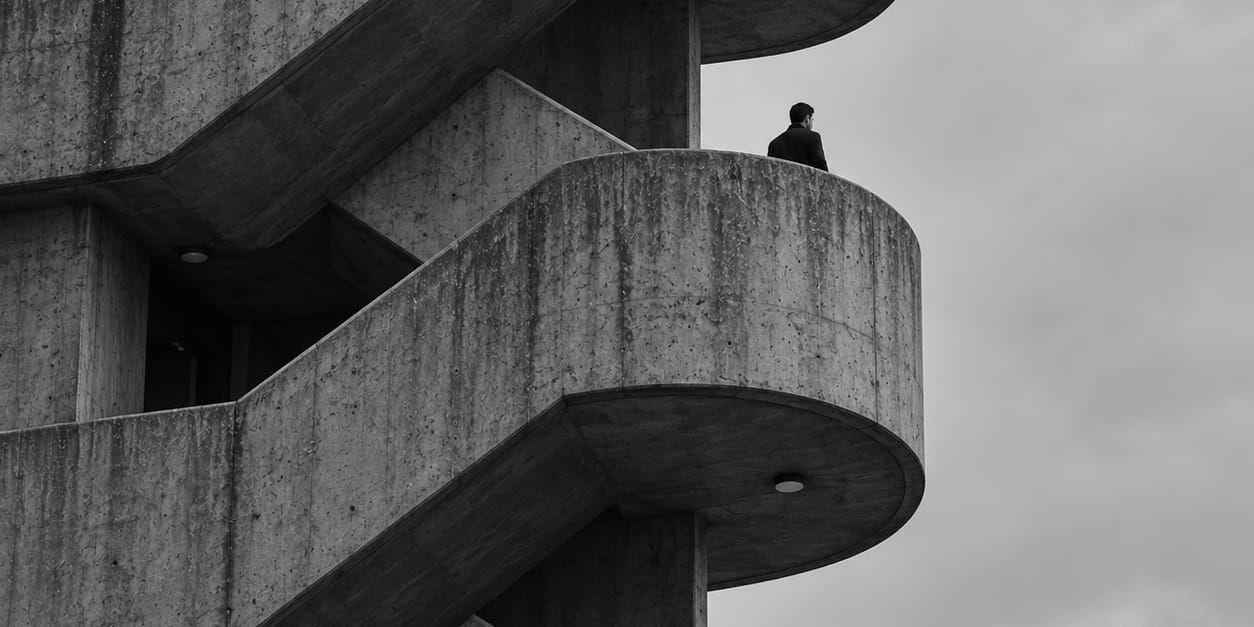
On pressure, rebuilding and the work nobody saw.
There is a part of building a business that never makes it into the finished picture.
People see the projects. The clients. The reputation. The years.
They do not see the sleepless nights, the money you lie awake moving around in your head, the responsibility of other people’s wages, or the hundreds of quiet problems you solve so nobody else ever has to know they existed.
And underneath it all is the weight of knowing that, in the end, it rests on you.
I’ve spent most of my working life building Arkhaus. It was never just a business. It was the clearest way I knew to say what I believe: that design, construction and people belong together, and that a building should be better for the care that went into it. Like a lot of people who build something from nothing, I gave it almost everything I had.
Perhaps more than I had.
When things fall apart
Over the past two years, I have lived with severe depression.
I want to be precise about that word, because it gets used loosely. This was not a bad patch or a hard few months. It was the slow disappearance of things I had always taken for granted: confidence, energy, the ability to make a decision and trust it. At its worst, it reached past the work and into my sense of who I was.
From the outside, very little stops. That is one of the quiet cruelties of running a small practice. There is no pause button. Projects keep moving. Clients need answers. Bills arrive on time whether you do or not. People are depending on you, and you know it, and knowing it becomes part of the weight.
But it taught me something I needed to learn.
You can lose momentum. You can lose confidence. For a while, you can even lose sight of what you were building, and why. What you cannot lose — what nobody can take — is the experience, the instinct and the way of seeing that made it possible in the first place. Those were never in the business. They were in me. They still are.
The work nobody saw
There was another side to those two years, and it is the part I most want to tell.
On the days when almost nothing else felt possible, I could still sit down and build. Often late into the night. Sometimes for days on end. It was the one place my mind would hold still long enough to think: to test an idea, solve a problem, and turn something heavy and shapeless into something real I could point to.
I didn’t understand it at the time, but that was how I was keeping myself going. One small working thing, then another. Proof, each time, that I could still make something.
Somewhere in those thousands of hours, the work began to change. I started building things I had never had the time, the freedom or the reason to build before: systems for running projects, organising information, keeping everyone informed, and stripping away the repetitive work that quietly drains a small studio.
And I started asking questions I had carried for years without ever stopping to answer them. Why do the important decisions on a project become so hard to find later? Why are clients so often left guessing what happens next? Why does technology so often add another layer to the work, instead of making it clearer?
So I stopped waiting for someone else to answer them. I built the answers myself. Quietly. Persistently. While much of the rest of my life felt like it was standing still.
What began as a way to keep moving became something much bigger. I wasn’t only trying to get back what had been disrupted. I was building the version of Arkhaus I had wanted to build for years. I had just never been forced to sit still long enough to make it.
What this means for the people we work with
Those systems are now finding their place in the practice, and the point of them isn’t technology. It’s people.
It’s a client who can see where their project stands, what needs their attention and what comes next, without having to chase anyone to find out. It’s a builder or consultant who gets clear information when they need it, and a more direct way of working with us. It’s fewer things falling through the cracks, because I now know exactly what that costs.
It has changed how I design, too. I think harder about what needs protecting in an idea, what can be simplified, and how a concept survives the real pressures of cost, structure and construction. A beautiful idea is only the beginning. It has to stay useful, buildable and worthwhile once it leaves the page. Much of what I built in these two years exists to help that happen: to help the people we work with build better, and often more efficiently, than the usual way allows.
There are things in that work I am genuinely proud of. I’ll share more as they’re ready.
If you are in it right now
I’m writing this for another reason, too.
If you are somewhere in the middle of your own hard season — running something, carrying people, holding it together in front of everyone and coming apart when you are alone — I want you to hear this from someone who has been there: the worst of it is not the end of the story, even when it feels exactly like it is.
You don’t have to fix everything at once. You don’t even have to feel better to begin. Some days the only win available is one small thing, done honestly. Do that one thing. Then do the next. The progress that matters most is often invisible, even to you.
And please don’t carry it alone the way I tried to. Talk to someone: a doctor, a friend, a professional. In Australia, Lifeline answers at any hour on 13 11 14, and Beyond Blue on 1300 22 4636. Reaching out isn’t the opposite of strength. It’s where strength starts again.
The next chapter
I’m not writing this because everything is resolved. It isn’t. There is still a lot to rebuild: relationships to restore, systems to finish, work to put right. But rebuilding has a clarity of its own. It shows you what matters, who is reliable, and that real progress is usually quiet, repetitive and unseen, until the day the pieces start working together again.
I believe in Arkhaus. Maybe more than I ever have. I still believe in design that is thoughtful, practical and connected to how people live. And I’ve come to believe that the most important work is often the work nobody sees at first.
You can knock someone down. You can make things extraordinarily hard. You can make them question everything they have worked for. But you cannot take away the thing that made them able to build it in the first place.
So if you’ve been knocked down: get up. Not all at once. Just get up.